
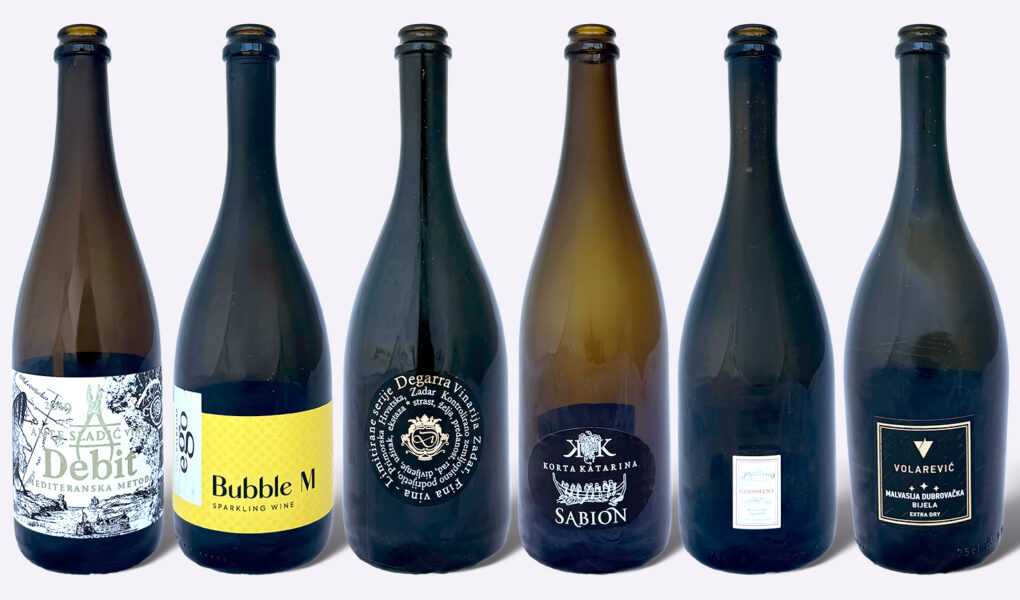
More and more wineries in Dalmatia are making sparkling wine, in part to appeal to visitors. It is a wine of celebration–and what better to celebrate than a week of pleasure and freedom in sunny Dalmatia? We tasted 6 Dalmatian sparkling wines; here’s what to expect from them, and what might be different from what you usually drink.
Croatia’s cool Plešivica region, near Zagreb, is famous for making sparkling wines from the same grapes as are grown in Champagne, in France. But these varieties, overall, do not grow in Dalmatia’s dry heat. Instead, Dalmatian wineries experiment with making bubbly from the varieties they have, such as Debit and Maraština. And there is more than one way to go about it.
The traditional method of making sparkling wine is the one used in the Champagne region: two fermentations, the second of which takes place in each wine bottle, capturing the bubbles inside. The less expensive and time-consuming method is the one used to make Prosecco, in northern Italy. Instead of the second fermentation in each bottle, it takes place in a large wine tank; then the wine is bottled under pressure to preserve the bubbles.
The traditional method tends to produce richer wines, and these are required to be aged longer before they are released for sale. The tank method achieves lighter, fruitier flavors overall, and requires shorter aging. The complexity of the process is reflected in the price of the wine. Both methods are used in Dalmatia, and both are represented in our tasting below.
The Tasting
Note: This tasting is meant to be readable, not comprehensive. We tasted 6 wines, not 60. The wines are listed in alphabetical order by producer. A star (*) indicates wines that stood out for their quality and flavor on the day of the tasting. Prices are those at the winery or winery webshop.
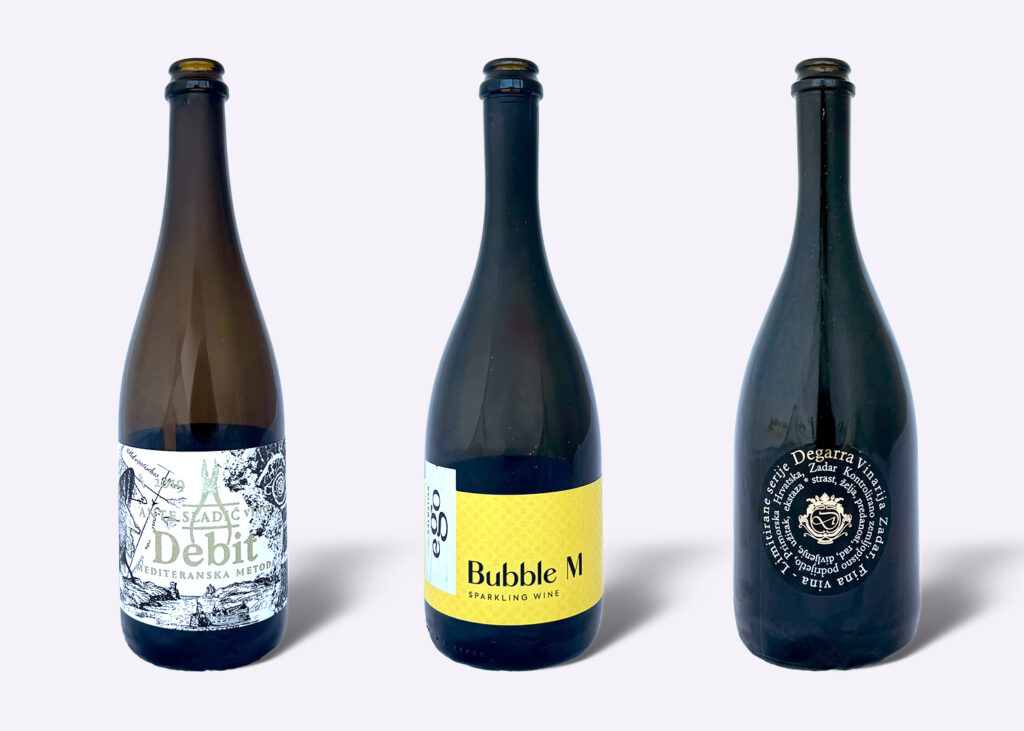
*Ante Sladić Debit Brut Nature 2019 (Plastovo) €24
If some of these wines are aiming at a Champagne experience, and others are aiming at Prosecco, this wine aims squarely at its own tradition. Sparkling Debit was historically made in the area around Šibenik, though undoubtedly more rustic than this pear-scented gem made using a variation on the traditional method. Singed orange peel, nectarine (less sweet than peach) and a light toast flavor take over your mouth. Guest tasters pronounced it “most versatile–I could drink this alone or with a meal.” Indeed, it was fantastic with Caesar salad with shrimp.
Dalmatian Ego Bubble M NV (Jadrtovac) €13
The M is for Maraština, the local grape variety used for this tank-method wine. And this wine could be an ambassador for the style–overall it is fresh, due to its acidity and lemon-juice-on-stones flavors. The finish has a touch of bitter lemon pith, but this is just a refreshing teaser for another sip. Guest tasters pegged it as “beach wine” and “day-drinking” for its basic, cheerful fizz, although they “wish it had a little more going on.” At this price, though, why argue?
Degarra Primo Brut 2021 (Zadar) €20
This wine combines a ripe, flavorful grape variety (Pošip) with the intensely yeasty flavors of traditional-method wine making. The result is a wine with aromas and flavors of sourdough bread and tangy yogurt, plus something like seawater. The finish is more delicate, like toasted brioche, and satisfyingly long-lasting. Is all that yeast too much of a good thing? Guest tasters found this too intense for sipping on its own, preferring the fruit flavors of the other wines.
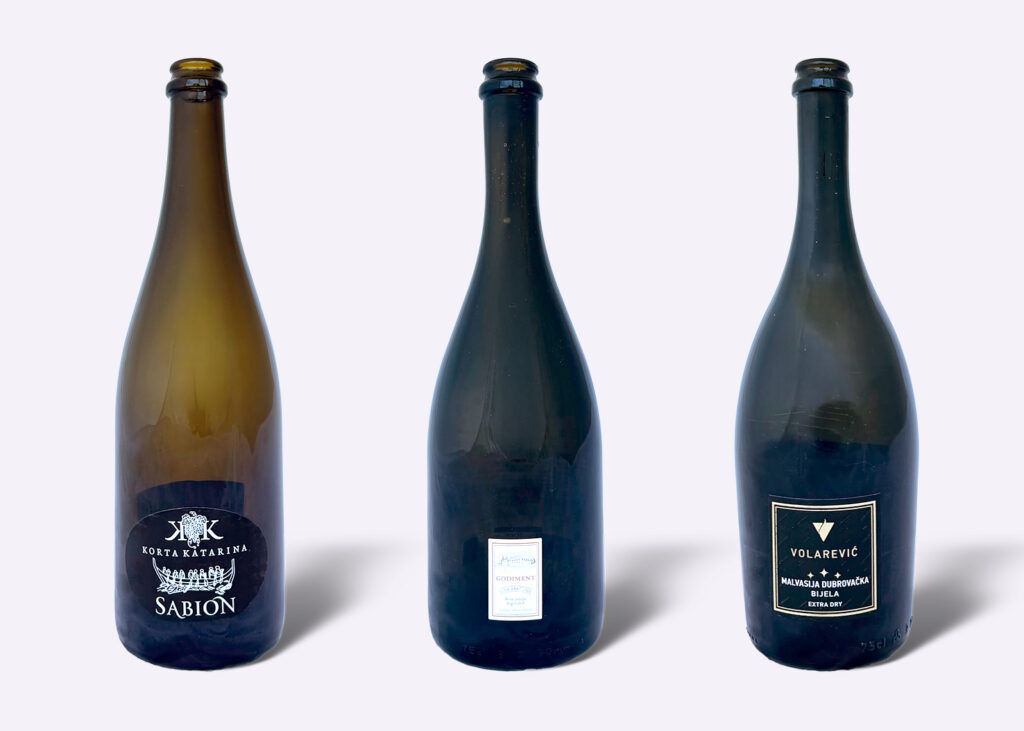
Korta Katarina Sabion Ekstra Brut NV (Pelješac) €26
Like the Dalmatian Ego wine here, this Sabion is made from Maraština, which is called Rukatac in the south of Dalmatia. This one, however, is made using the traditional method. Guest tasters preferred its deeper color in the glass, but noticed that its more explosive bubble made tasting a challenge. Still, the wine has a lot to offer: aromas of toast, sea brine, flavors of lemon marmalade, brioche…a satisfying balance of fruity and yeasty notes.
*Stina Godiment Brut Nature NV (Brač) €12.50
In the category of “refreshing,” this wins hands down. Guest tasters found it “slightly more sophisticated” than the other tank-method sparklers here, and it has a lot to offer. Lemon and seawater aromas, a nice fluffy bubble, light body and simple, fresh flavors of lemon (including the slightly bitter pith) wet stones and even a touch of nectarine. It’s 70 percent Pošip, with a little Vugava and Chardonnay. We’d choose this over Prosecco at the same price–it’s perfect for brunch or for sipping, and it’s local.
Volarević Malvasija Dubrovačka Extra Dry NV (Komarna) €14.50
The flavorful intensity of Malvasija Dubrovačka translates into a richly citrussy sparkling wine. Because this is made using the tank method, it is not yeasty like the traditional method wines above. Instead, its richness comes from floral aromas and a touch of anise, and flavors not of fresh lemon but something more concentrated, like lemon drops. This extra dry wine has slightly more sugar than the others here, but the wine is not sweet. It comes across as rich, sensuous. It will please drinkers who don’t want “barely-there” but revel in flavor instead.
Cheers Croatia Magazine conducts wine tastings in the semi-blind format. This means that we know what wines we have, but they are placed in numbered bags so we can’t identify them during the tasting. Wines for tastings are purchased, or occasionally donated by the winery. See the magazine’s Affiliations and Gifts Policy for more information.